Recovering stalled or abandoned sites
A failed contractor, damage to the works, a dispute, a project structure that was wrong from the start: a stalled site costs money every week. PRIMOE steps in within the first days, in Paris and Île-de-France: we protect the works, have their condition formally recorded, cost the remaining work, then restart the site on a binding schedule and run it through to practical completion.
Let’s talk about your site +33 1 72 68 22 71
By Alain Bonnetaud, founder of PRIMOE · Updated
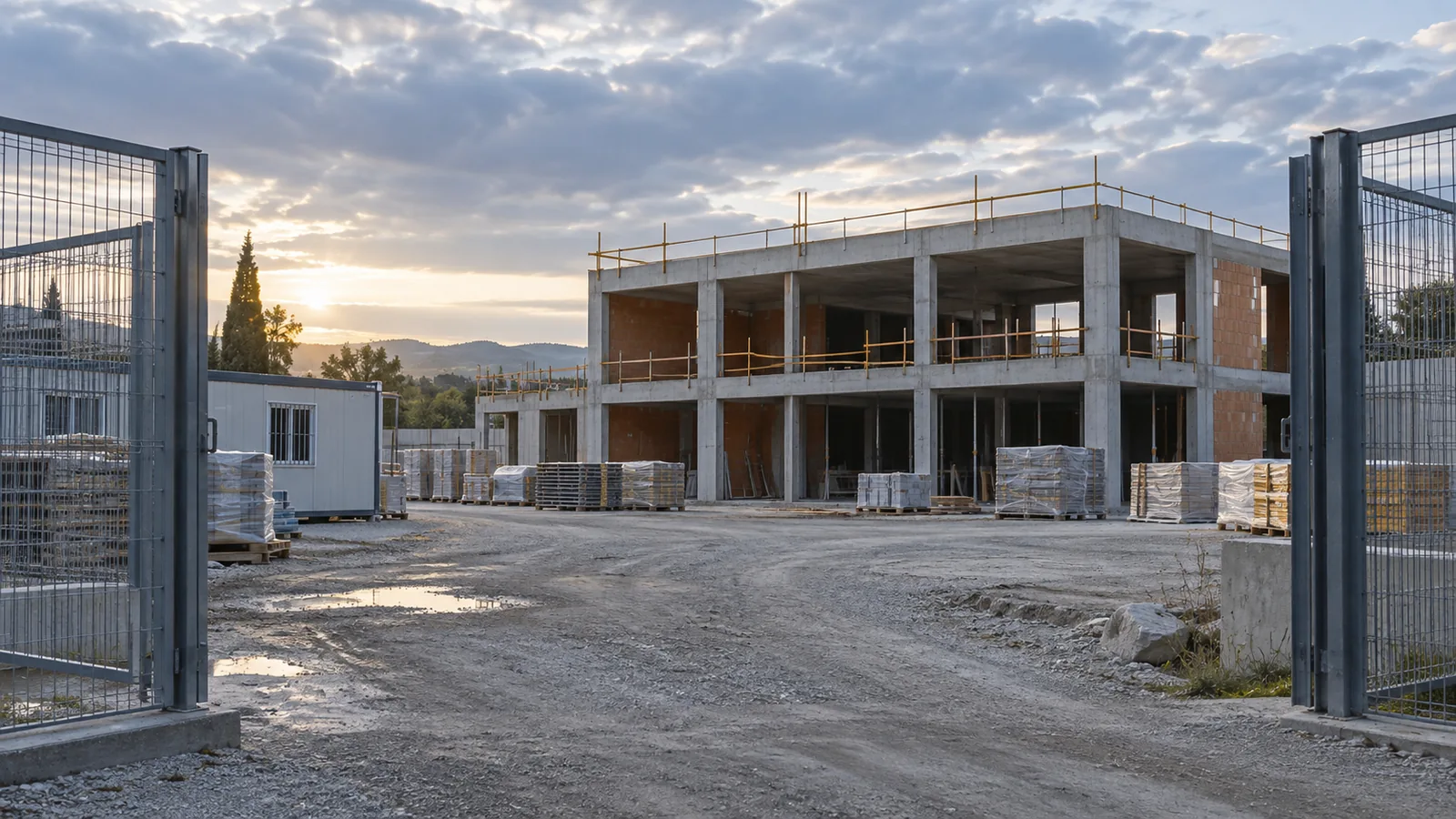
What do we do in the first days of a stoppage?
We step in within the first days to protect the works and pin down the facts, not to restart the works. A decision taken before you know who is still committed, and to what, may well have to be undone.
With you and your advisers, we deal with five things before anything else.
Make the site secure
Hoarding, access, security guarding, weather protection for the parts not yet enclosed.
Have the condition of the works recorded
In writing, backed by dated photographs, and where possible jointly with the contractors concerned.
Gather the documents
Contracts, contract amendments, site instructions, interim valuations, site minutes, insurance certificates.
Inform the insurers
As the policies in force require: a prolonged stoppage can change the risk covered.
Identify the exact cause of the stoppage
A suspension for non-payment, abandonment, insolvency proceedings or an official order to halt the works each call for different steps.
These decisions, and how the recovery plan is then built, are set out in our guide stalled site: first decisions and recovery plan.
Has your site just stopped? Call us.
Why sites stop
A main contractor that files for insolvency, damage during the works, a contractual dispute that turns sour, an unrealistic initial budget: the causes vary, but the mechanism is always the same. The longer the stoppage, the more the recovery costs: weather getting into a building that is not yet enclosed, guarantees expiring, contractors pulling out.
Recovery is part of what we do: in Pantin (93), PRIMOE took over construction supervision (MOEX) of a 15-unit housing site, which is still in progress.
An interrupted site is not necessarily an abandoned one: abandonment can only be established by analysing the facts, the reasons for the stoppage and the contractual correspondence. That is why we start by establishing the cause.
How does a recovery work, from audit to restart?
A recovery follows a sequence: record, audit, clarify the contracts, tender, then restart on a realistic schedule. A skipped step is often paid for later, in a contract amendment or a dispute.
-
Joint record of condition
The condition of the existing works is recorded in the presence of the parties or by a third party, either a judicial officer (commissaire de justice) or an expert. It separates the work done from the work remaining.
What you getThe written record of the condition of the works
-
Technical and financial audit
Compliance of what has been built, work to be redone, sums paid against actual progress, costed remaining work. Our guide on site audits describes what it covers.
What you getThe costed remaining work and a realistic out-turn appraisal for the project
-
Status of the contracts
Each trade package is classed as continuing, suspended, to be amended, being terminated or to be replaced. Under French law, terminating a contract by notice (résolution par notification) requires, except in an emergency, a prior formal notice (mise en demeure) that has gone unheeded and that expressly warned of this risk (Article 1226 of the Civil Code). After formal notice, the client may also itself arrange for the obligation to be performed, within a reasonable time and at a reasonable cost (Article 1222 of the Civil Code). These notices are prepared with your lawyer.
What you getThe status of each contract, trade package by trade package
-
Site protection and planning consent
The site stays guarded throughout the recovery. Under the general rules of French planning law, a building permit lapses if, after its validity period, the works are interrupted for more than a year (Article R*424-17 of the Town Planning Code). If the stoppage results from an order to halt the works, the lifting of that order is governed by Article L480-2 of the Town Planning Code.
-
Tendering for the recovery
The trade packages to be replaced or completed are tendered on a scope drawn from the audit, so that bids are comparable and contractors take over works whose condition is known.
What you getThe recovery plan: contractors kept on, replaced or supplemented
-
Restart schedule
It starts from each contractor’s real lead times and the sticking points identified, then it is kept on track through scheduling and coordination (OPC) and followed on site through construction supervision (MOEX) until practical completion.
What you getA binding restart schedule
Throughout the recovery, decisions and commitments are recorded in writing, and a PRIMOE project manager runs no more than three sites at a time. The full method is in our guide on building the recovery plan for a stalled site.
What you get, and what it settles.
A recovery is won on the contractual framework as much as on site. Backed by legal advisers, we document the condition of the existing works before anyone touches them, so that past liabilities do not contaminate the future of the project.
| What you get | What it settles | At which step |
|---|---|---|
| Written record of the condition of the works | Work done is separated from work remaining; at practical completion, each snag can be traced to the right contractor. | 1Record (step 1) |
| Costed remaining work | You know what has been paid against actual progress, and what finishing the project will cost. | 2Audit (step 2) |
| Status of each contract | No new contractor is invited to tender for scope that is still contracted to another. | 3Contracts (step 3) |
| Recovery plan | Bids are comparable and contractors take over works whose condition is known. | 5Tender (step 5) |
| Binding restart schedule | It starts from each contractor’s real lead times: a date announced without its prerequisites in place can recreate the same deadlock. | 6Restart (step 6) |
Our structured approach and our knowledge of the contractual framework save real time and give better control of costs, at a point where every week counts.
Want to know where your site really stands?
Failed contractor, damage, dispute: what changes?
The recovery sequence stays the same, but the legal starting point differs with the cause of the stoppage. It determines who can decide, within what time limits and with which documents.
Contractor in judicial liquidation
Under French insolvency law, the opening of judicial liquidation (liquidation judiciaire) does not by itself end the contract in progress (Article L641-11-1 of the Commercial Code). The liquidator may choose to continue it; the client may serve formal notice on the liquidator to make that choice, and the contract is terminated by operation of law if the notice goes unanswered for more than one month. Subcontractors keep a direct action (action directe) against the client, including when the main contractor is in liquidation (Article 12 of Law No. 75-1334 of 31 December 1975). Any claims the client has must be lodged with the liquidator within two months of the judgment being published in the BODACC, the French official gazette of commercial notices (Articles L641-3 and R622-24 of the Commercial Code). See our guide on a contractor going into liquidation mid-project.
Damage during the works
The priority is preserving the evidence and taking protective measures: nothing is demolished or redone before the necessary inspections, carried out with the insurers and, where applicable, the appointed expert. The recovery costing separates what stems from the damage from what is simply the normal completion of the works. Under French insurance law, new circumstances that increase the risks must be declared to the insurer within fifteen days of the insured becoming aware of them (Article L113-2, 3°, of the Insurance Code).
Contractual dispute
When the stoppage stems from a disagreement over a payment, a contract amendment or the quality of the work, the facts are first established in writing. In the cases provided for by French law, an unpaid contractor that has not been given a payment guarantee may suspend performance after a formal notice that has gone unheeded for fifteen days (Article 1799-1 of the Civil Code).
Has your lead consultant withdrawn or stopped attending the site?
We take over supervision of the works part-way through. The site has not necessarily stopped: the first step is to establish where it stands and what has been decided, then to take over the assignment from the outgoing lead consultant (maître d’œuvre) on a written basis.
The handover takes place in five stages.
Review the existing contract
Scope of the appointment, tasks completed, fees paid, termination terms: your lawyer checks how the contract comes to an end. Under French law, termination by notice requires, except in an emergency, a prior formal notice that has gone unheeded (Article 1226 of the Civil Code).
Recover the site documents
Drawings at their latest revision, approvals issued, site minutes, site instructions, interim valuations and payment recommendations: without them, the recovery starts blind.
Establish the state of the site
Actual progress trade package by trade package, work carried out without drawing approval, snags already known, delays on record: a written record separates what belongs to the previous appointment from what we take over.
Take over supervision of the works
Meetings, site minutes, approvals and checking of interim valuations resume under our responsibility, as construction supervision (MOEX), with scheduling and coordination (OPC) if the schedule needs rebuilding.
Agree the way forward with the architect
If the architect remains the author of the design, we organise with them how drawings and changes are circulated: the takeover covers the execution of the works.
Lead consultant not responding? Call us.
Frequently asked questions
Another question? Call us on +33 1 72 68 22 71 or email contact@primoe.fr.
My main contractor has failed: what should I do first?
Secure the site, have the condition of the existing works recorded in writing, and notify the insurers and guarantors within the contractual deadlines. Then audit the remaining work before re-engaging anyone. We can step in from this stage.
What should you do when a contractor abandons the site?
In this order: secure the site; have the progress of the works recorded in writing, preferably in the contractor’s presence; serve formal notice on the contractor to resume; inform the insurers and guarantors; then, once the contract has been properly terminated, cost the remaining work and tender it to a replacement contractor. Bringing in another contractor before the record and the termination opens the door to disputes over what each one has done. See our guide site abandonment: what to do, and in what order.
Can you change lead consultant during the works?
Yes. The existing contract must first be properly brought to an end, which your lawyer checks. We then recover the site documents, draw up a written record of progress and take over supervision of the works as construction supervision (MOEX). The site does not always need to stop during this handover.
How long does it take to restart a stalled site?
It depends on the condition of the works and the contractual framework. The initial audit generally takes a few weeks; it is the audit that gives a reliable recovery schedule rather than a promise.
How much does an audit of a stalled site cost?
There is no published reference price. The audit is priced on the time required, by quotation: that time depends on the size of the building, the number of trade packages, the progress to be recorded, the state of the documents (contracts, interim valuations, construction drawings) and whether there is a dispute or insolvency proceedings.
Is an interrupted site necessarily abandoned?
No. Abandonment can only be established by analysing the facts, the reasons for the stoppage and the contractual correspondence. A justified or agreed interruption is not handled like an abandonment without cause.
Do you work with insurers and experts?
Yes. A recovery almost always involves expert assessments, guarantees and sometimes litigation. We document everything that needs documenting and work alongside your legal advisers and the appointed experts.
Can a liquidated contractor’s trade package be given to another contractor?
Not until the contract has been terminated. Under French law, the opening of liquidation does not by itself end the contract: it can be ended, for example, after a formal notice served on the liquidator has gone unanswered for more than one month (Article L641-11-1 of the Commercial Code). Your lawyer checks where the contract stands; in parallel, we prepare the tender for the remaining work.
Can only some trade packages be restarted?
Yes, if their prerequisites are cleared and partial continuation is compatible with the contracts, the permits and safety. The schedule must confirm that it does not create rework or new, poorly controlled interfaces.
How does a recovered project end?
With practical completion (réception): under French law, the act by which the client declares that it accepts the works, with or without snags, in the presence of both parties (Article 1792-6 of the Civil Code). Defects reported are then covered by the one-year defects warranty (garantie de parfait achèvement), which runs from practical completion. The record made at the start of the recovery makes it possible to trace each snag to the right contractor.
Do you work anywhere in France?
In Paris and Île-de-France. For a project elsewhere, let’s talk: we decide case by case.
Our guides on this topic
 GuideStalled site: how to build a recovery plan that holds
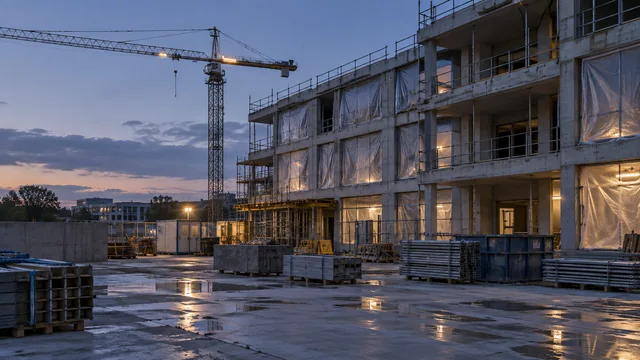 GuideSite abandonment: what to do when a contractor walks off the job
 GuideContractor in liquidation: how to regain control of the site
 GuideSite audit: how to get a diagnosis you can act on
- GuideConstruction delays: how to prove them and apply penalties