primoe.
FRLet’s talk about your project

Converting a building into a hotel or serviced residence

A hotel or serviced residence is no ordinary building: the operator sets part of the brief, planning law requires a planning change of use, and the safety rules for buildings open to the public apply. PRIMOE supports the owner from feasibility to opening, in Île-de-France: study, operator search, permits, then management of the works under construction supervision (MOEX) and scheduling and coordination (OPC).

Let’s talk about your building +33 1 72 68 22 71

By Alain Bonnetaud, founder of PRIMOE · Updated

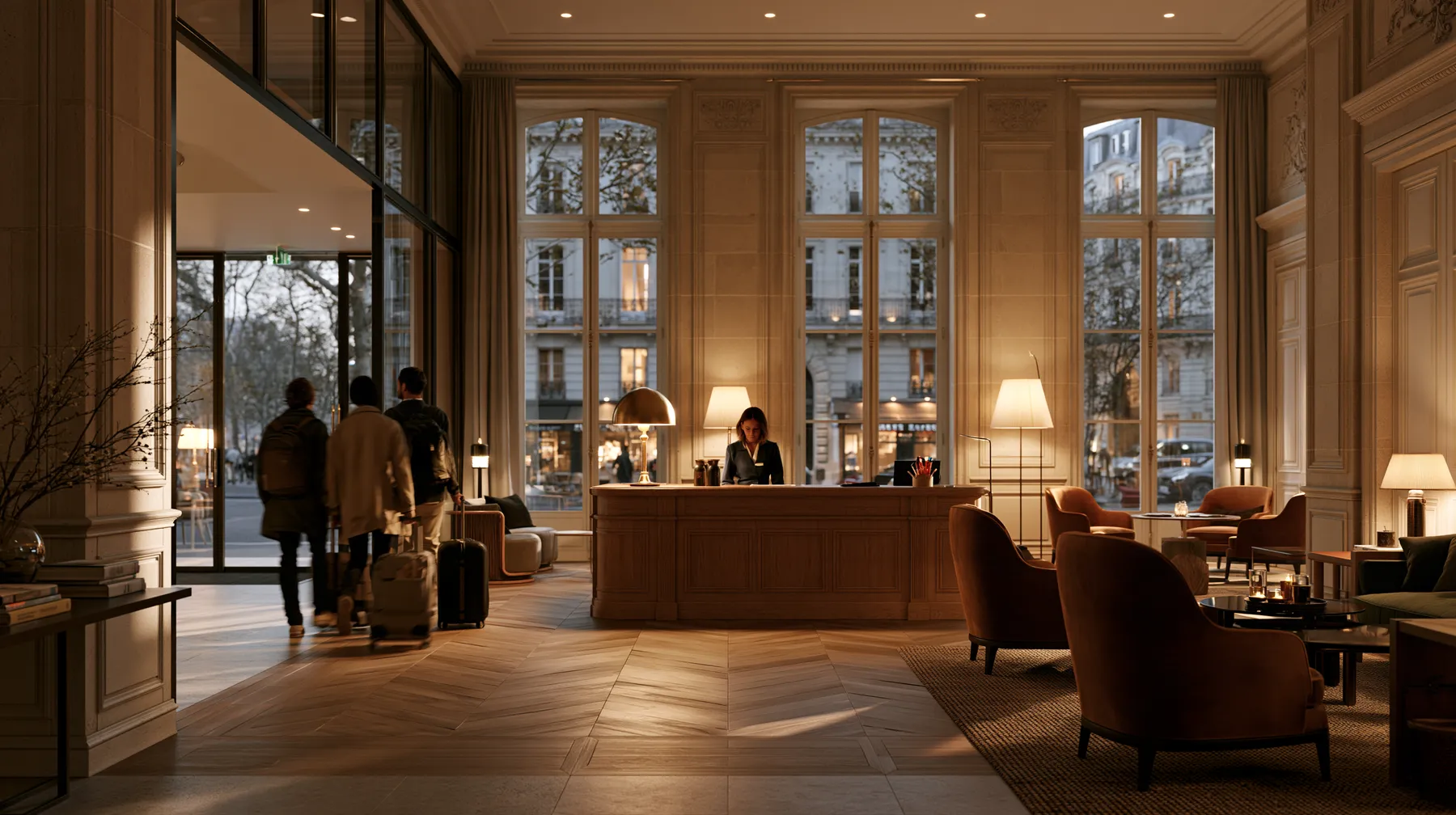
Paris hotel lobby: reception desk, armchairs and travellers with their suitcases, in front of tall windows onto the street

What changes when a building becomes a hotel?

Terms used on this page

Operator
The company that will run the hotel or residence.
Use category
The category of use of a building under the French Town Planning Code (destination).
ERP
Building open to the public (établissement recevant du public): a safety regime of its own.
IGH
High-rise building (immeuble de grande hauteur).

Three things: its planning use category, its safety regime and its future occupant. French planning law puts “offices” and “hotels” in two different use categories (Articles R151-27 and R151-28 of the Town Planning Code). A hotel receives members of the public. And it is an operator, not the owner, who will run it.

Under French law, a planning change of use requires a prior declaration (Article R*421-17 of the Town Planning Code), and a building permit where the works alter the load-bearing structure or the façade (Article R*421-14 of the Town Planning Code). You then need to check that the local zoning plan (PLU) allows the intended use at that address.

A building open to the public (ERP) is any building to which people are admitted, either freely or on payment (Article R143-2 of the Construction and Housing Code): a hotel meets this definition. Above 28 metres, a building other than housing also falls into the high-rise category (IGH) (Article R146-3 of the same Code). These classifications dictate the staircases, smoke control and emergency equipment required.
How does a conversion work, from study to opening?

Where do you start? By checking what the building can become: the use allowed by the PLU, fire safety, capacity, structure. Then by looking for the operator before design starts, because the operator’s requirements shape the project. Once the brief has been settled with them, the permit applications are prepared and the works are run through to opening.

Before design

  1. Feasibility

    Use allowed by the PLU, fire safety classification, capacity of the building, structure, access: what the building can become, and on what conditions.

    What you getThe written feasibility study

  2. Operator search

    A presentation file sent to operators whose business is a good fit, site visits, then the choice of contractual framework with your lawyer.

    What you getThe list of operators approached and their responses

  3. Brief with the operator

    Number of rooms or units, shared areas, technical installations, level of service: the brief incorporates the operator’s specification.

    What you getThe project brief

Before the works

  1. Permits

    Prior declaration or building permit for the planning change of use, and the works authorisation required for buildings open to the public.

  2. Tendering and contracts

    Like-for-like analysis of the bids, review of the contracts, choice of procurement route: main contractor or separate trade packages.

    What you getThe comparative analysis of the bids

During and after the works

  1. Works

    Construction supervision (MOEX) to direct the works, scheduling and coordination (OPC) to keep the schedule and coordinate the contractors, with no more than three sites per project manager.

    What you getSite minutes and an up-to-date schedule

  2. Completion and handover

    Pre-completion inspection, clearing the snags, as-built file: the operator takes over the building with its documentation.

    What you getThe practical completion certificate and the checked as-built file

How the operator search works, what file to prepare, and how to choose between a commercial lease and a management contract: see our guide to finding a hotel operator for a building.

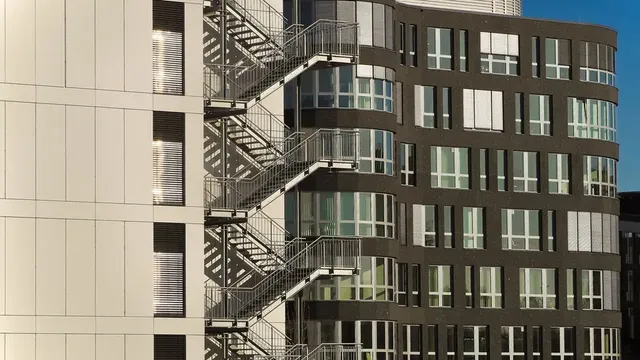
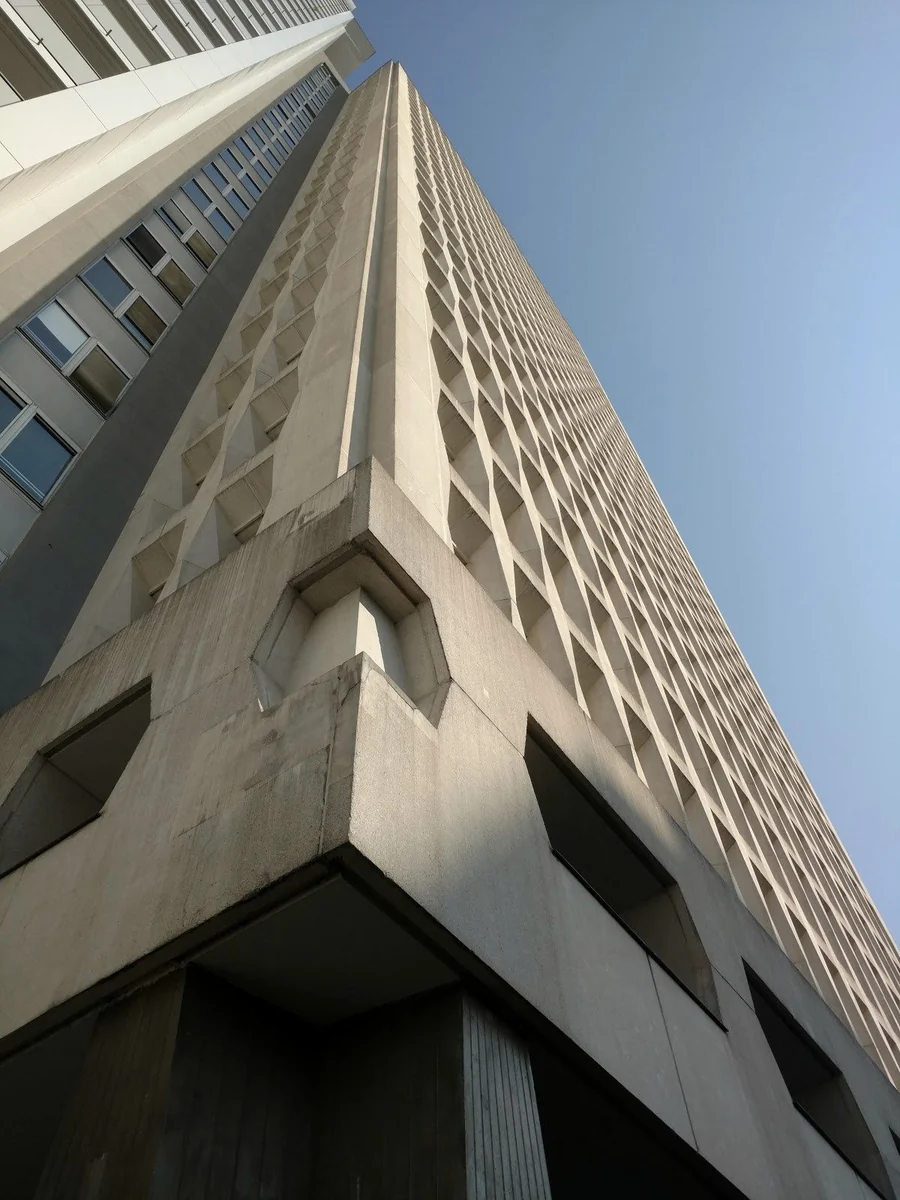
Corner of a high-rise building in the 15th arrondissement of Paris, seen from below
Paris 15th · high-rise building

In Paris 15th, from feasibility to hotel operator.

Paris 15th

Building
High-rise building
Service
Owner’s representation (AMO), feasibility and operator search
Status
Design stage

Owner’s representation (AMO) on a high-rise building in the 15th arrondissement: PRIMOE led the feasibility study, then the search for a hotel operator, and found one. A demanding technical and regulatory context, specific to high-rise buildings (IGH).

See all our projects

Could your building become a hotel?

Hotel, tourist residence, residence with services: what is the difference?

The format is primarily the operator’s choice, but it changes the legal regime, the planning use category and the brief. French law defines them as follows.

“Aparthotel” is a marketing term: the legal regime of a project presented that way has to be checked case by case, with your adviser.

Frequently asked questions

Another question? Call us on +33 1 72 68 22 71 or email contact@primoe.fr.

Let’s talk about your building

Do you need a building permit to turn offices into a hotel?

Under French law, a planning change of use requires a prior declaration; it needs a building permit if the works alter the load-bearing structure or the façade of the building. The local zoning plan (PLU) must also allow the “hotels” use at that address.

Is a hotel a building open to the public?

Yes. A hotel receives guests: it meets the definition of a building open to the public (ERP) in the Construction and Housing Code, with the safety rules that go with it. The classification is to be established by an engineering consultant for each operating model under consideration.

Should you find the operator before drawing up plans?

Yes, ideally. The operator’s requirements (number of rooms, shared areas, technical installations) shape the project; knowing them before drawing avoids having to redo the plans.

Do you provide construction supervision (MOEX) on hotels?

Yes. We run the works under construction supervision (MOEX) and scheduling and coordination (OPC) on hotels and serviced residences, as we do on housing and refurbishment projects, in Île-de-France.

Commercial lease or management contract: who decides?

The owner, with their lawyer. The framework depends on the operator and on how the owner wants risk to be shared; our guide to finding a hotel operator sets out both models.

How much does our support on a hotel conversion cost?

Each service is priced separately: the feasibility study on quotation, construction supervision (MOEX) at between 3 and 5% of the cost of the works excl. VAT, scheduling and coordination (OPC) at between 0.8 and 2%. See our fees.

Where do you work?

In Île-de-France, where our team is based. For a project elsewhere, let’s talk: we decide according to the nature of the project.

Contact

Let’s talk about your project.

A building to study, a construction site to run or restart, an operator to find: tell us where you stand.

3 rue Alfred Roll, 75017 Paris, France · Projects across Paris and Île-de-France

Or describe your project in a few lines.

Your details are used only to reply to you. They are never passed on or used for marketing. Your data (in French)