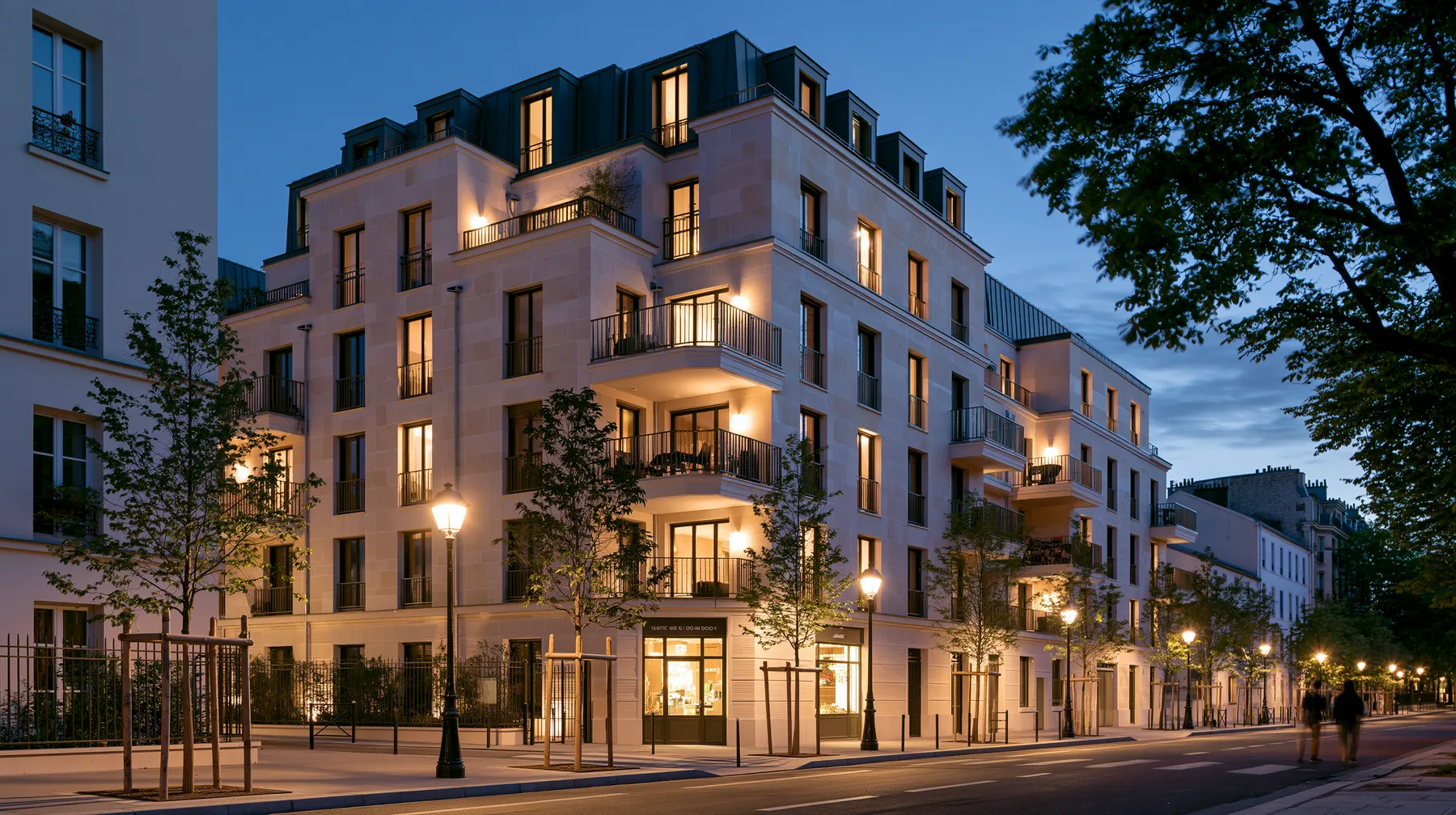
primoe.
FRLet’s talk about your project

Office-to-residential conversion

Under French planning law, converting offices into housing is a planning change of use (changement de destination): it requires a prior declaration, or a building permit when the works affect the load-bearing structure or the façade. Before anything is drawn, PRIMOE checks that the building lends itself to it: structure, floor heights and floorplate depth, fire safety, planning rules.

Get my asset assessed +33 1 72 68 22 71

By Alain Bonnetaud, founder of PRIMOE · Updated

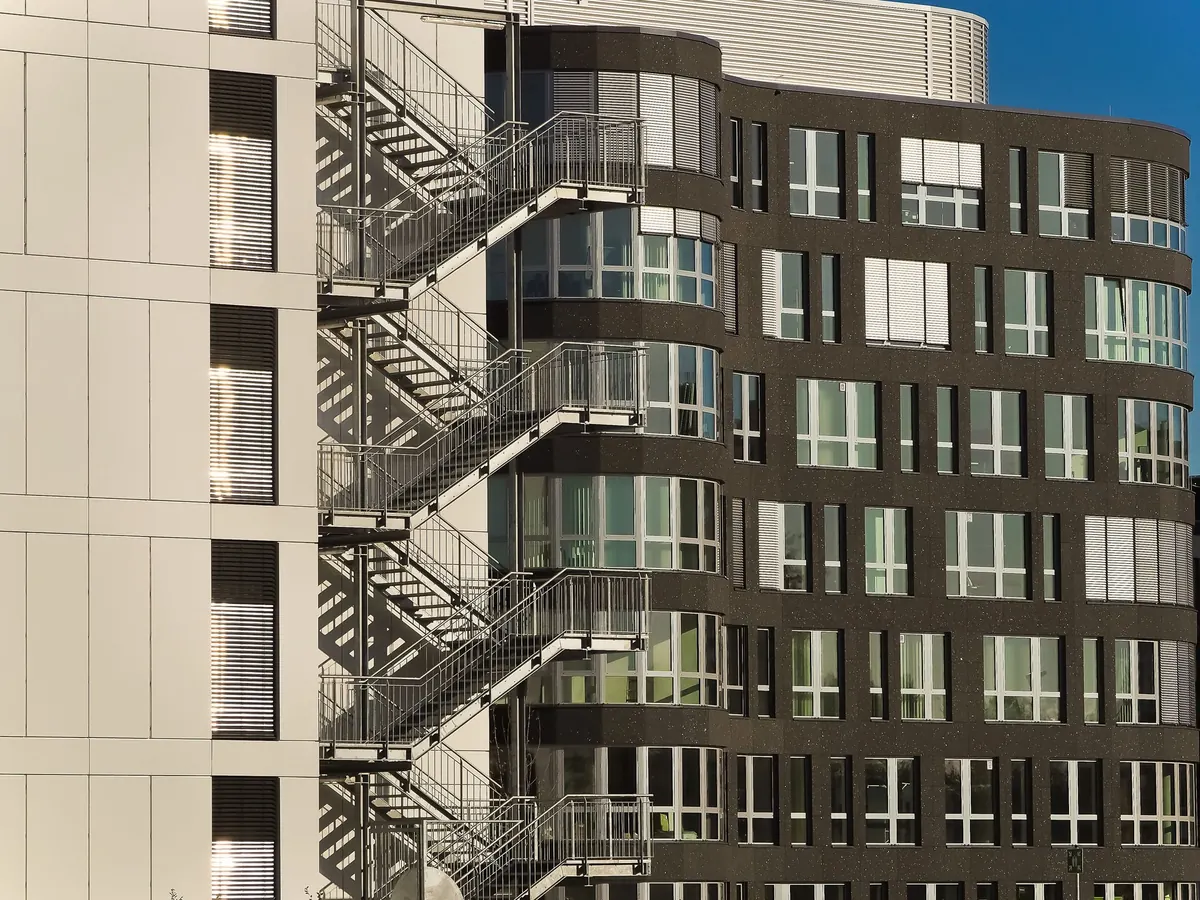
Façade of an office building with external steel staircases and bands of glazing

Can offices be converted into housing?

Terms used on this page

Planning change of use
The changement de destination, governed by the French Town Planning Code: prior declaration or building permit.
Housing change of use
The changement d’usage, governed by the French Construction and Housing Code. It only covers housing converted to another use.
Major refurbishment
Keeps the load-bearing structure and completely reconfigures the interior.

Yes, on two conditions: the building must lend itself to it, and the rules must allow it. That is the purpose of the first step of our study: we check the structure, floor heights, floorplate depth, fire safety and planning rules, then tell you what is possible, and on what conditions.

A conversion does not have to cover the whole building: in a partly vacant office building, one part can change use without touching the rest.

And if the answer is no, you know before committing to design and construction costs. It is one of the studies carried out by PRIMOE Development.

What makes an office building convertible?

The brief is not set by the market alone: it follows from the constraints found in the building. Five points are checked before anything is drawn.

  • Structure and floors

    The load-bearing capacity of the floors is checked for the new use. A tight structural grid with load-bearing intermediate floors points towards housing, provided the main load-bearing structure is not defective.

  • Floor heights and floorplate depth

    They are measured on the first visit, along with the structure: they are the first inputs to the study.

  • Fire safety, utilities, easements

    Checked at the same time as the local zoning plan, to list what is allowed on the property and what is not.

  • Asbestos

    Under French law, for a building constructed before asbestos was banned, a pre-works asbestos survey is mandatory before any work likely to disturb asbestos-containing materials (Article R4412-97 of the Labour Code). Carried out before costing, it avoids discovering an extra cost once work is under way.

  • Local zoning plan (PLU)

    Under Article R151-28 of the Town Planning Code, it can allow, restrict or prohibit each use sub-category (sous-destination): the target use category is checked before anything is drawn.

Is your office building emptying out?

Get my asset assessed +33 1 72 68 22 71

Planning or housing change of use: which authorisations?

In French law, converting offices into housing is a planning change of use (changement de destination), governed by the Town Planning Code: prior declaration or building permit. The housing change of use regime (changement d’usage), governed by the Construction and Housing Code, only covers housing converted to another use: it does not apply in this direction. We identify the authorisations required from the study stage.

Authorisations linked to a planning or housing change of use under French law, what triggers them and the applicable text
ProcedureWhat triggers itLegal text
Prior declaration A planning change of use that does not involve works requiring a permit. Article R*421-17 of the Town Planning Code
Building permit A planning change of use combined with works on the load-bearing structure or the façade. The architectural design must then be prepared by an architect, unless the law provides an exemption. Article R*421-14 and Article L431-1 of the Town Planning Code
Waiver of zoning plan rules The local zoning plan does not allow housing at this location: the authority that grants the authorisation may waive the rule, subject to the binding approval (avis conforme) of the authority responsible for the local zoning plan. Article L152-6-5 of the Town Planning Code
Housing change of use No authorisation needed on this ground: it only applies to residential premises converted to another use. Once they have become housing, the premises are subject to it in the municipalities concerned. Article L631-7 of the Construction and Housing Code

A permit granted is not yet a permit secured: the authorities can withdraw an unlawful permit within three months of its date (Article L424-5 of the Town Planning Code), and third parties have a period in which to appeal. Near a historic monument or in a designated heritage area (site patrimonial remarquable), the state heritage architect (architecte des Bâtiments de France) is consulted on the project; it is best to involve them early.

How does a conversion work, step by step?

A conversion follows the order of any project: study, choose, obtain the authorisations, tender, then build. At each step, you decide whether to continue, adjust or stop, on the basis of written information.

  1. Feasibility study

    The condition of the building, the rules that apply, the possible uses, costed. The details are on our feasibility study page.

    What you getThe study report and our recommendation

  2. Brief

    We help you choose a use, or walk away knowing why.

    What you getThe project brief: what will be built

  3. Authorisations

    Choosing the right type of authorisation, preparing the application with the architect, dealing with the planning officers, and following it through until the authorisation is final.

  4. Tendering

    Tender documents, competitive tendering, bid analysis, contract finalisation.

    What you getA file ready for the bank, the planning authority and contractors

  5. Works

    PRIMOE Delivery takes over to run the construction site.

    What you getThe same team, the same documents, through to handover

The timeline depends mainly on the authorisations: processing time, any requests for further documents, and the appeal and withdrawal periods often weigh more than the studies.

For the budget, our guide to converting a building describes what drives the cost of a conversion. Every project needs its own estimate.

Visualisation of the Saint-Ouen housing project: a building with a timber façade and a green roof, between two older buildings
Saint-Ouen (93) · visualisation of the project

Two feasibility studies for a planning change of use, in Saint-Ouen and Boulogne-Billancourt.

Saint-Ouen (93)

Brief
Housing
Service
Audit, feasibility, sketch design and preliminary design (APS)
Status
Study delivered

PRIMOE carried out the audit of the existing building and the feasibility study for the planning change of use, then the sketch design and preliminary design (APS) of this housing project, with a timber façade and a green roof.
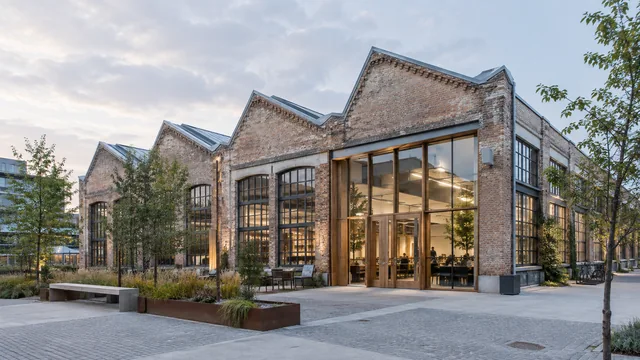
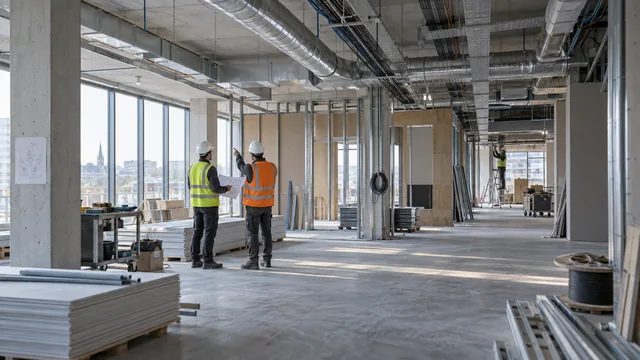
Boulogne-Billancourt (92)

Brief
Housing
Service
Audit, feasibility, sketch design and preliminary design (APS)
Status
Study delivered

PRIMOE carried out the audit of the existing building and the feasibility study for the planning change of use, then the sketch design and preliminary design (APS) of this housing project, with a zinc façade and a green roof.

See all our projects

Could your building become housing?

Frequently asked questions

Another question? Call us on +33 1 72 68 22 71 or email contact@primoe.fr.

Get my asset assessed

What does the French law of 16 June 2025 change?

French Law No. 2025-541 of 16 June 2025 makes it easier to convert offices and other buildings into housing in three ways. The authority that issues planning authorisations can waive the use rules of the local zoning plan (Article L152-6-5 of the Town Planning Code). In certain areas, a building permit can authorise several successive uses of the same building (Article L431-5). In a building held in co-ownership (copropriété), the change is approved by the majority set in Article 24 (Law of 10 July 1965, Articles 9 and 24).

The local zoning plan does not allow housing: can it be waived?

It is possible, but it is not a right. The authority that rules on the building permit or prior declaration can authorise the change of use to housing by waiving the use rules of the local zoning plan, after the binding approval (avis conforme) of the authority responsible for the local zoning plan. The waiver can be refused, by a reasoned decision, on four grounds: nuisance for future occupants, insufficient access by transport other than private cars, the impact on schools, and social and functional mix objectives (Article L152-6-5 of the Town Planning Code).

What is a successive-use permit?

In areas designated by the local authority responsible for the local zoning plan, a building permit can authorise several successive uses of the same building, for example offices and then housing. Later changes to the zoning plan’s use rules cannot call this permit into question for twenty years (Article L431-5 of the Town Planning Code). The implementing decree provided for in the law was still awaited in November 2026.

Do the co-owners have to agree?

When converting non-residential units (other than commercial premises) into housing conflicts with the intended use of the building (destination de l’immeuble), it must be put to a vote of the general meeting, by a majority of the votes cast by the co-owners present, represented or voting by post (Law of 10 July 1965, Articles 9 and 24). Works affecting the common parts follow their own voting rules.

How much does an office-to-residential conversion cost?

According to the report submitted in July 2025 to the French minister responsible for housing by Nadia Bouyer and Xavier Lépine, works cost an average of €2,550 excl. VAT per m² of habitable floor area, excluding land and asbestos removal, within a range of €2,050 to €4,500 excl. VAT per m² of habitable area depending on the project (report, page 37). These are averages from a sample of projects: every building needs its own estimate.

Which taxes should you plan for in Île-de-France?

Two rules to know. Vacant offices covered by a commitment to convert them into housing can be exempted from the annual tax on offices (taxe annuelle sur les bureaux), provided the conversion is carried out within four years of the planning authorisation (Article 231 ter of the General Tax Code). The conversion is liable to the municipal or inter-municipal share of the development tax (taxe d’aménagement), from which the local authority can grant an exemption by resolution (Articles 1635 quater B and 1635 quater E). To be confirmed with your tax adviser for your building.

Housing or planning change of use: what is the difference?

In French law, a planning change of use (changement de destination) falls under the Town Planning Code: it requires a prior declaration when it does not involve works that need a permit (Article R*421-17), and a building permit when it involves works on the load-bearing structure or the façade (Article R*421-14). A housing change of use (changement d’usage) falls under the Construction and Housing Code (Article L631-7): in the municipalities concerned, converting housing to another use requires prior authorisation. Converting offices into housing is therefore not subject to it.

Do I need an architect?

The feasibility study can start before you choose an architect, and it helps define the architect’s scope of work. However, under French law, the architectural design in a building permit application must be prepared by an architect, unless the law provides an exemption.

Can you then manage the works?

Yes. A project structured with PRIMOE Development can then be built with PRIMOE Delivery, which directs the works and coordinates the contractors, with the same team and the same documents.

Contact

Let’s talk about your project.

A building to study, a construction site to run or restart, an operator to find: tell us where you stand.

3 rue Alfred Roll, 75017 Paris, France · Projects across Paris and Île-de-France