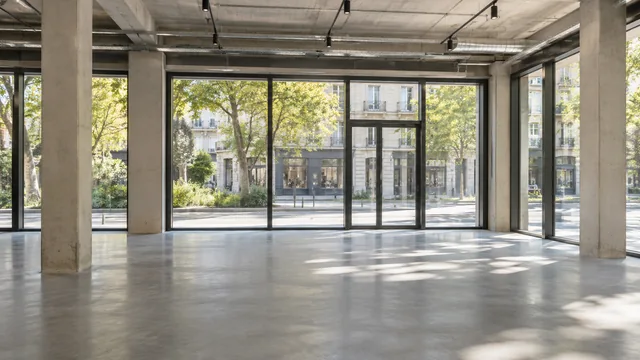
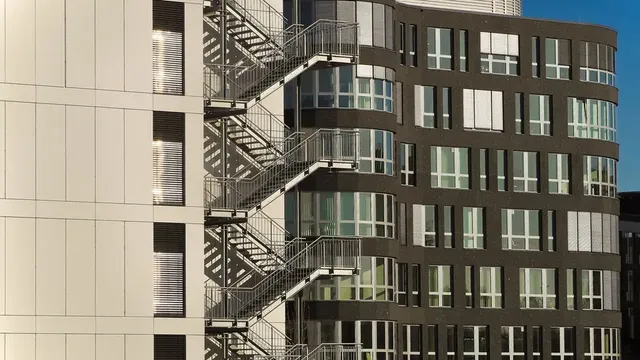
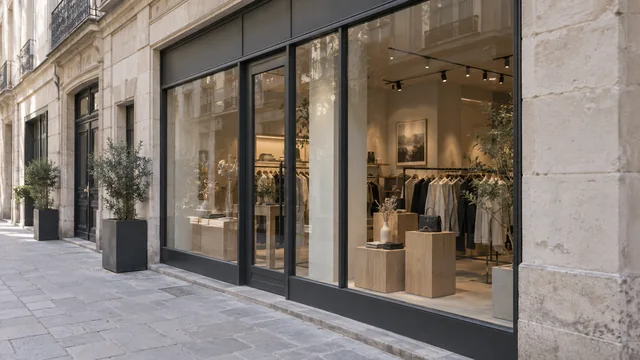
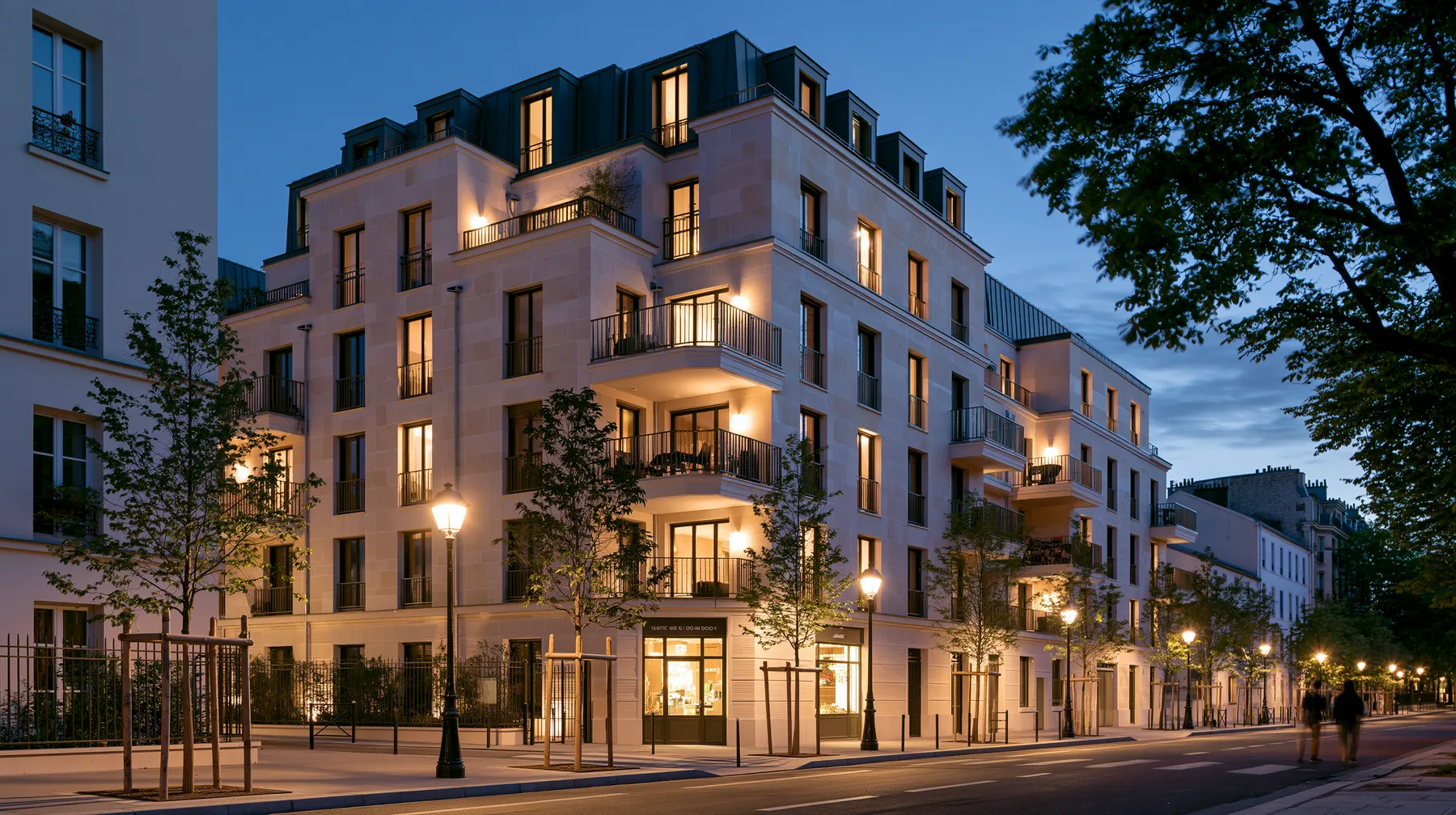
An empty office building, a building to be remodelled, a tower: its owner is considering a hotel, an aparthotel or a serviced residence, and will not run it themselves. So the first question is not the contract. It is who will want to operate this building.
This guide describes how an owner or an investor finds that operator, what to present to it and under which framework to commit. The articles cited are French law and were checked on Légifrance, the official French legal database, on 13 November 2026. This guide is no substitute for a lawyer: the lease or the management contract is drafted with one.
Why look for the operator before the project is designed?
Because an operator does not simply take up square metres: it runs an establishment, with its own floor areas, structural grid and services. If it arrives after the plans are drawn, it asks for them to be redone, or it walks away. If it arrives before, its requirements become the project brief.
Its requirements drive five things:
- floor areas: size of the rooms or units, share of common areas, staff facilities;
- the structural grid: the spacing of the load-bearing elements and the depth of the floor plates set the number of units per floor;
- access: guests, staff, deliveries;
- fire safety: staircases, smoke control, compartmentation;
- equipment: kitchen, laundry, ventilation, hot water, lifts.
This sequence has a limit: an operator will not commit to a building whose capacity nobody knows. So there are three stages: a feasibility study that establishes what the building can take, then the operator search, then the detailed plans, drawn up with the operator.
In Paris 15th, PRIMOE provided owner’s representation (AMO), the feasibility study and the search for a hotel operator for a high-rise building; the operator was found.
In short: look for the operator after the feasibility study and before the detailed plans. The study says what the building can take, the operator says what it needs, and the plans translate both. Reverse that order and you end up redesigning the project, or offering a building that no operator shortlists.
Hotel, residence, coliving: which operating models suit a building?
Five operating models come up for a whole building: hotel, aparthotel or tourist residence, student residence, senior residence, and coliving. They have neither the same legal definition nor the same requirements.
Scroll the table sideways →
| Operating model | What French law says | What it requires of the building |
|---|---|---|
| Hotel | A tourist hotel is a “classified commercial accommodation establishment” (that is, star-rated) offering rooms or furnished apartments to guests passing through, by the day, the week or the month (Article D311-4 of the Tourism Code) | Repeated standard rooms, each with its own shower room; a reception, back-of-house areas, often food and beverage |
| Aparthotel, tourist residence | A tourist residence (résidence de tourisme) brings together “furnished living units and premises for collective use”, for tourists who do not take up residence there; it is run “by a single natural or legal person” (Article D321-1 of the Tourism Code). The word “aparthotel” does not appear in the articles read for this guide | Furnished units with kitchens, so more pipework and services per unit |
| Student residence | A university residence (résidence universitaire) provides “collective housing as a main residence”, with private units and premises for communal life, for students and young people in training (Article L631-12 of the Construction and Housing Code) | Many small units, common rooms, an office for on-site management |
| Senior residence | A residence with services (résidence-services) is “a group of dwellings made up of self-contained homes allowing the occupants to benefit from specific services that cannot be allocated individually” (Article L631-13 of the Construction and Housing Code) | Complete, accessible homes and substantial common areas: dining, lounges, service rooms |
| Coliving | No definition in the articles read for this guide. Its legal classification has to be checked project by project | Private rooms or studios around shared spaces |
Two further points. In France, a hotel is classified in a star category “at the request of the operator” (Article L311-6 of the Tourism Code): the target category is the operator’s choice, and it weighs on what the operator will ask of you. Second, a private residence for students or older people does not necessarily fall under the two articles cited: check its legal regime with your adviser.
What does an operator look for in a building?
Six points: location and transport links, capacity, structure and storey heights, planning use category, technical condition, and fire safety. A single deal-breaker is enough to rule the building out: better to know about it before the operator does.
- Location and transport links. Where the guests or residents will come from: railway station, public transport, business district, university, tourist sights. An address cannot be changed: it is the first filter.
- Capacity. The number of rooms or units the building can hold, once circulation, plant rooms and common areas have been deducted. Each operator has its own minimum: ask for it, do not guess it.
- Structure and storey heights. A deep office floor plate leaves a core without daylight, where neither a bedroom nor a flat can go. The floor-to-floor height tells you whether the pipework for one shower room per bedroom can be routed.
- Planning use category. Is the activity permitted at this address, and with which consent? See below.
- Technical condition. Façades, waterproofing, lifts, building services, asbestos, energy performance: what is kept, what is redone, and who pays for what.
Fire safety and the building’s classification
Under French law, two classifications matter. A building open to the public (ERP, établissement recevant du public) means “all buildings, premises and enclosures to which people are admitted, either freely or on payment of a fee or any form of contribution” (Article R143-2 of the Construction and Housing Code). A hotel receives guests: it meets this definition.
A high-rise building (IGH, immeuble de grande hauteur) is one where the floor of the top storey stands “more than 50 metres” above the ground accessible to fire service vehicles “for residential buildings”, and “more than 28 metres for all other buildings” (Article R146-3 of the Construction and Housing Code). These classifications dictate the staircases, smoke control and emergency equipment. Have them established by an engineering consultant, for each operating model under consideration.
Video: converting an office building into a hotel
These points can be followed through a textbook case: an 8-level office building converted into a 168-room hotel, in six steps (reading the existing building, changing the use category, receiving the public, designing the rooms, routing the services, opening the hotel). Every rule shown on screen gives its source. Running time: 5 min 31 s. The video is in French.
Commercial lease or management contract: which framework to choose?
Under a commercial lease, the operator is the tenant: it trades on its own account and pays rent. Under a management contract, the owner remains the operator and entrusts the management to a hotel management company that it pays: the profit or loss, and the risk, are the owner’s. A lease of the business (location-gérance) and franchising are two other frameworks.
The commercial lease
The French statutory regime for commercial leases (statut des baux commerciaux) applies to leases of buildings or premises “in which a business is operated” (Article L145-1 of the Commercial Code). The owner lets the building; the hotelier runs its business (fonds de commerce) there. Four rules are worth knowing.
- Term. It “may not be less than nine years”. The tenant may give notice at the end of each three-year period, at least six months in advance (hence the “3/6/9” lease). However, leases granted for more than nine years and leases of “premises built for a single use” may provide otherwise (Article L145-4 of the Commercial Code). That is what makes it possible to agree a fixed term without break options, if your building falls into one of these cases.
- Rent on renewal. It must reflect the rental value (Article L145-33 of the Commercial Code). For a lease of no more than nine years, the change in rent is in principle capped by the change in an index (Article L145-34 of the Commercial Code). For premises built for a single use, the rent may be set “according to the practices observed in the line of business concerned” (Article R145-10 of the Commercial Code).
- Charges and works. The lease contains “a precise and exhaustive inventory of the categories of charges, taxes, levies and fees”, showing how they are split between landlord and tenant (Article L145-40-2 of the Commercial Code).
- End of the lease. The landlord may refuse to renew, but must then, subject to certain exceptions, pay eviction compensation (indemnité d’éviction), which includes in particular “the market value of the business” (Article L145-14 of the Commercial Code). Taking back a building let to a hotelier therefore comes at a price.
The lease sets the initial rent: a fixed amount, a turnover-based element, or both, as the parties agree. The short-term lease, limited to three years in total (Article L145-5 of the Commercial Code), has its own guide: the short-term commercial lease (bail dérogatoire).
The management contract
No single French statute defines the hotel management contract (contrat de gestion, also called contrat de management). In broad terms, the owner, or a company it sets up for the purpose, owns the business and provides the resources to run it. An operator manages the establishment on the owner’s behalf, under its own brand and with its own methods, in return for fees. The owner takes the result, good or bad.
Depending on how it is drafted, the contract may amount to an agency agreement (mandat): “an act by which one person gives another the power to do something for the principal and in the principal’s name” (Article 1984 of the Civil Code). The agent is then “bound to account for its management” (Article 1993 of the Civil Code). The Commercial Code also provides for the managing agent (gérant-mandataire), who runs a business on behalf of a principal, who “remains its owner and bears the risks of operating it” (Article L146-1 of the Commercial Code). How the contract is classified and drafted is a matter for your lawyer.
Leasing the business, and franchising
A lease of the business (location-gérance) is the contract by which the owner of a business lets it to a manager “who operates it at their own risk” (Article L144-1 of the Commercial Code). It presupposes that the owner already owns a business. A franchise, for its part, binds a brand to whoever trades under its name; no single French statute defines it. Anyone who makes their brand available while requiring exclusivity must provide a disclosure document at least twenty days before signature (Article L330-3 of the Commercial Code).
The frameworks side by side
Scroll the table sideways →
| Framework | Who operates | Who bears the operating risk | What the owner receives | French law |
|---|---|---|---|---|
| Commercial lease | The operator, as tenant, on its own account | The operator | Rent, set by the lease | Commercial Code, Article L145-1 onwards |
| Management contract | The owner or its operating company; an operator manages on its behalf | The owner | The operating result, once the operator has been paid | No single statute; Civil Code, Article 1984, if the contract is an agency agreement |
| Lease of the business (location-gérance) | The manager who leases the business | The manager, “at their own risk” | The fee for leasing the business, set by the contract | Commercial Code, Article L144-1 onwards |
| Franchise | Whoever signs with the brand: the owner, or an operator that is a tenant | Whoever operates | Nothing as such: a franchise does not govern the relationship with the owner of the building | No single statute; Commercial Code, Article L330-3, for pre-contractual disclosure |
In short: a commercial lease gives the owner rent and leaves the risk with the operator, under a statutory regime that protects the tenant. A management contract leaves the result and the risk with the owner. Not every operator offers both: ask the question at the very first conversation.
How to find the operator, step by step
The search follows five steps: assess the building, target the operators, present the file to them in tiers of information, organise the visit and the questions, then introduce the interested operator to the owner.
- Assess the building. Establish the six points described above, for each possible operating model.
- Target the operators. Shortlist those whose business, market segment and establishment size fit the building and the neighbourhood. A building shopped around to everyone soon looks like a problem asset.
- Present the file in tiers. First a short presentation: address, project, estimated capacity. Then the detailed file, once a non-disclosure agreement has been signed. Finally the in-depth documentation, for operators whose interest and financial strength have been checked.
- Organise the visit and the questions. The operator’s questions are recorded in writing, with the answers and their sources. They show what will have to change in the project.
- Make the introduction. The operator that confirms its interest meets the owner. The contractual framework and its terms are settled between them, with their lawyers.
This is how our operator search service runs: PRIMOE assesses the asset, presents the file to operators whose business suits it, organises the visit and the questions, then introduces the operator to the owner, who concludes the deal directly with their own advisers.
For ground-floor commercial premises, see our guide to finding an operator for a retail unit.
What file should you prepare for a hotel operator?
The file should let an operator say whether the building interests it without having to ask for everything again. Every piece of information in it states its source and date.
- Location. Address, transport links, comparable establishments nearby.
- Plans and floor areas. Plans of each level, sections, floor areas by level.
- Structure. Grid, floor-to-floor heights, cores, staircases, lifts.
- Fire safety. The building’s current classification and existing safety documents.
- Planning. Current use category, rules of the local zoning plan (PLU), easements.
- Technical condition. Available surveys, condition of the façades and building services.
- Legal position. Title deed, whether or not the building is in co-ownership (copropriété), current leases and the dates they end.
- Capacity study. Number of rooms or units per scenario, with the assumptions used.
- Works and timetable. What has been estimated, and what the owner intends to pay for.
Say what is not known: it is better to write “not verified” next to a piece of data than to leave it out.
Which permits should you plan for?
At least two: the planning consent that the change of use requires, and the works authorisation specific to buildings open to the public. Both are prepared from the feasibility study onwards.
The planning change of use
The French Town Planning Code sorts buildings into five use categories, or destinations (Article R151-27 of the Town Planning Code), divided into sub-categories (Article R151-28 of the Town Planning Code):
- “offices” (bureau) belongs to the category “other primary, secondary or tertiary sector activities”;
- “hotels” and “other tourist accommodation” belong to the category “retail and service activities”;
- “accommodation” (hébergement) belongs to the category “housing”, alongside “dwellings” (logement).
A ministerial order specifies what each one covers. The “other tourist accommodation” sub-category includes, among others, tourist residences. The “accommodation” sub-category covers residences or hostels with services, including retirement homes, university residences and independent-living residences for older people (ministerial order (arrêté) of 10 November 2016 on the use categories and sub-categories of buildings).
Converting offices into a hotel or a residence therefore moves the building from one use category to another. Under French law, this change requires a prior declaration, or déclaration préalable (Article R*421-17 of the Town Planning Code). It requires a building permit where the works alter “the load-bearing structures or the façade of the building” (Article R*421-14 of the Town Planning Code). You then need to check that the local zoning plan (PLU) allows the intended use at that address.
The authorisation for buildings open to the public
Works leading to “the creation, fitting-out or alteration of a building open to the public” may only be carried out once an authorisation has been granted, covering accessibility and, depending on the number of people admitted and the type of establishment, fire safety. Where the works require a building permit, the permit serves as this authorisation, provided the same authority has given its agreement (Article L122-3 of the Construction and Housing Code). Opening the establishment is itself subject to an authorisation (Article L122-5 of the Construction and Housing Code).
A high-rise building is subject to additional safety rules of its own. The feasibility study establishes, for each scenario, the use category, the safety classification, the permits to apply for and the works they entail. If housing is also one of the scenarios, see our guide on converting offices into housing.
Hotel operators, leases, works: the questions owners ask
How do you find a hotel operator for a building?
In five steps. Commission an assessment of what the building can take: capacity, structure, fire safety, use category. Target operators whose business and market segment are a good fit. Present them with a file, short at first, then detailed under a non-disclosure agreement. Organise the visit, then meet the operator that confirms its interest, with your lawyer.
Commercial lease or management contract: what is the difference?
With a commercial lease, the operator is the tenant: it trades on its own account, bears the risk and pays rent. With a management contract, the owner remains the operator; a management company runs it on the owner’s behalf for a fee, and both the result and the risk stay with the owner. In France, the lease is governed by the Commercial Code; the management contract has no single governing statute.
Should you find the operator before the works?
Yes, and even before the detailed plans. The operator’s requirements set the room sizes, the common areas, the access and the equipment. Works started without the operator may have to be redone. You do, however, need a feasibility study before approaching one.
Which operators suit a converted office building?
Hoteliers, aparthotel or tourist residence operators, student or senior residence managers, coliving operators. The choice depends on the address, the depth of the floor plates, the structural grid, the safety classification and what the local zoning plan allows.
How long does it take to find an operator?
There is no standard time frame. It depends on the address, the size of the building, the number of operators whose criteria match, and their internal decision-making processes. What you can control is time wasted: a building studied in advance and a complete file avoid the back-and-forth.
Converting offices into a hotel: do you need a building permit?
Under French law, going from offices to a hotel is a planning change of use. It requires a prior declaration, or a building permit where the works alter the load-bearing structure or the façade (Articles R*421-17 and R*421-14 of the Town Planning Code). On top of that comes the works authorisation for buildings open to the public.
Who signs the lease or the contract with the operator?
The owner, assisted by their lawyer or notary (notaire); the operator has its own advisers. PRIMOE handles everything that comes before: assessing the building, putting the file together, presenting it to operators whose business is a good fit, and organising the visit and the meeting.
Where do you start if your building needs an operator?
With the building. Gather the plans, the title deed, the current leases and the surveys, then have its capacity and constraints established for each possible operating model.
The work is then split three ways. The owner decides. Their lawyer drafts the lease or the management contract. PRIMOE studies the building, prepares the file and presents it to operators: see our feasibility study and operator search services, and our PRIMOE Activation path. To submit a building to us: contact@primoe.fr, with its address, floor area and occupancy status.
An example: for an office tower in the 15th arrondissement, PRIMOE carried out the regulatory study, checked the capacity of the typical floor, then found the operator for a hotel residence of around 90 rooms, before the acquisition.